At Geo Oceans, we specialise in delivering innovative robotic inspection solutions for the offshore energy industry. Our ICOT (In-Service Cargo Oil Tank) system is a next-generation ROV-based technology designed for non-intrusive inspection (NII) of FPSOs, tankers, and marine vessels. This advanced service provides comprehensive condition mapping of cargo oil tanks (COTs) by accessing them from adjacent water ballast tanks (WBTs)—eliminating the need for manned entry and minimising operational disruption.
ICOT – Robotic In-Service Cargo Oil Tank Inspection
What is ICOT?
Unlike single-purpose tools, ICOT is a versatile delivery platform for a suite of unmanned and robotic advanced NDT methods, customised to meet the specific inspection requirements of each tank.
By integrating technologies such as Multiplexer UTM probes, ICOT enables accurate wall thickness measurements and corrosion mapping from locations traditionally inaccessible during internal inspections.
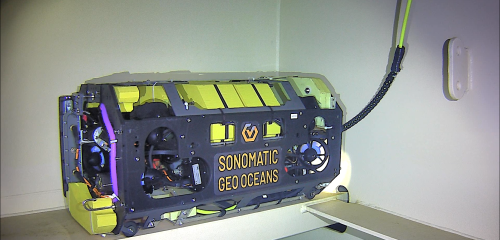
In a project on an FPSO in the Gulf of Mexico, Geo Oceans successfully deployed ICOT to assess the condition of COT/WBT shared boundaries. Using the Multiplexer UTM probe, we captured high-resolution data on structural integrity without entering the COT. This approach also allowed us to:
- Inspect areas typically hidden under sediment.
- Map corrosion on the deck from within the WBT.
- Reduce inspection time and associated costs.
- Enhance safety by avoiding confined space entry.
Benefits of ICOT
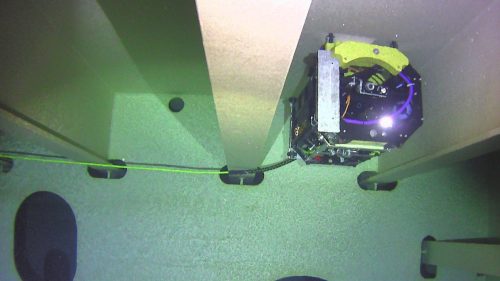
- Non-intrusive inspection (NII): Gain actionable insights without internal tank entry.
- Advanced NDT capabilities: Integrates multiple inspection techniques into one deployment.
- Operational efficiency: Minimise downtime while meeting class and regulatory requirements.
- Comprehensive coverage: Access complex geometries, horizontal and vertical boundaries, and high-risk areas such as hoppers and decks.
- Risk-based inspection planning: Focus on critical areas using data-driven methodologies.
Key Applications
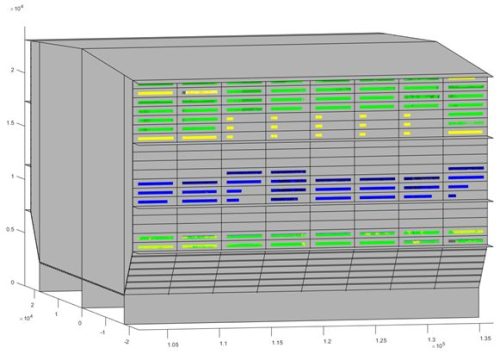
- FPSO Cargo Oil Tank Inspection: Map shared boundaries between WBTs and COTs to determine structural integrity.
- Water Ballast Tank Inspection: Capture condition data from easily accessible areas to gain insights into harder-to-reach COT regions.
- Deck and Sediment-Covered Area Assessment: Identify corrosion in high-risk zones traditionally hidden from view.
- Risk-Based Inspection Planning: Use ICOT data to focus maintenance and minimise unnecessary tank entry.
Overcoming Industry Challenges
ICOT was engineered to address common challenges in FPSO and marine vessel inspection, including limited structural information, complex orientations, narrow hatchways, and obstructions. Through collaborative development with our sister
